
The Reserve Bank of India (RBI) has decided to give new banking licences to create more capacity and competition in the Indian banking space but the right size is yet to be determined. "The right size of a bank remains a debate for the industry," said Deputy Governor Subir Gokarn.
The discussion on new banking licences will be posted on the website of the central bank for public comments, RBI governor D Subbarao said while unveiling the monetary policy for 2010-11.
The Reserve Bank on Friday set up a three-member committee under former Governor Bimal Jalan to scrutinise applications for new bank licences, which are expected to be awarded by January.

Bankers have read the Reserve Bank of India's (RBI) comments on foreign banks' market share in India as an indication that the promised review of policies on the presence of overseas banks in 2009 is unlikely to yield any greater leeway within which they can operate.

The appointment will be made by Prime Minister Narendra Modi in consultation with Finance Minister Arun Jaitley.
Identity of next central bank chief remains a matter of speculation.
The RBI kept its key policy repo rate unchanged at 8.0 percent in its recent monetary policy.

Acceding to the demand of banks, the Reserve Bank of India on Friday deferred the date of implementation of the proposed base rate model to July 1 and also exempted three category of loans from the new system.
Bankers do not expect any major changes in key interest rates by the Reserve Bank in its quarterly review of the monetary policy on October 31.

India's foreign exchange reserves surged $5.04 billion in the week ending March 28, its biggest weekly rise in four months, as the central bank started to buy dollars regularly in an effort to build up its defences against any potential global turmoil.
Ex-RBI Governor, Bimal Jalan, launched a high profile NGO Public Interest Foundation for the benefit of the deprived section of the society.
Economist and former Reserve Bank Governor C Rangarajan on Monday said that the economy will recover in the second half of 2009 and there would be distinct improvement in growth in 2010-11.

It is to be seen if SBI under Setty, who will have a three-year term, can ride the economic cycle to take SBI to new heights, navigating some of these challenges.
The Reserve Bank is in touch with various banks to understand why lending rates are not coming down despite the central bank cutting policy rates, even as the bankers expressed inability to lower the rates when bond yields remain high.
Reserve Bank governor, Y V Reddy, had a detailed meeting with Finance Minister P Chidambaram ahead of the monetary and credit policy next week.

The RBI on Thursday said banks' gross NPA ratio has fallen to a sever-year low of 5 per cent and the banking system remains sound and well-capitalised. In the 26th issue of the Financial Stability Report (FSR), the RBI also said the global economy is facing formidable headwinds with recessionary risks looming large. The interplay of multiple shocks has resulted in tightened financial conditions and heightened volatility in financial markets, it pointed out.

After Raghuram Rajan leaves, the world for the succeeding RBI governors will be distinctly different.
RBI Governor Shaktikanta Das on Friday said the government and the central bank are in discussion with South Asian countries to have cross-border trade in rupee. He also said the central bank digital currency (CBDC) is in trial phase and the RBI is moving very carefully and cautiously on digital rupee launch. After the successful launch of the wholesale pilot, the Reserve Bank of India (RBI) on December 1, last year, began its retail CBDC pilot project.

Reserve Bank of India Deputy Governor K C Chakrabarty has said that there is plan to cover all the villages through mobile banks by 2015.
For five consecutive policy reviews in 2023, the Reserve Bank of India (RBI) chose to hold rates, citing inflation threat. And when the prices did cool off a bit, it reminded all about the target to get the headline consumer price inflation at 4 per cent and the risks from food inflation. Heading into the new year, all eyes are on when RBI will cut the rates, especially after one of the Monetary Policy Committee (MPC) members stressed on the need for such an action in the face of the US Federal Reserve's guidance for easing rates.
The Reserve Bank of India on Thursday asked banks to review their loan policy towards micro, small and medium enterprises (MSMEs), badly hit by the economic slowdown.
Reserve Bank Governor Bimal Jalan on Saturday asserted the economy would achieve higher growth rate this fiscal in the face of strong economic fundamentals and good monsoon.

Rajan has a great track record abroad.
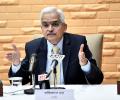
The Reserve Bank of India (RBI) on Wednesday raised the benchmark lending rate by 35 basis points to 6.25 per cent in a bid to tame inflation, which has remained above its tolerance level for the past 11 months. With the latest hike, the repo rate or the short-term lending rate at which banks borrow from the central bank now has crossed 6 per cent. This is the fifth consecutive rate hike after a 40 basis points increase in May and 50 basis points hike each in June, August and September.
"This year (2009-10), our WPI is low and I don't see any problem on the horizon which could destabilise us except oil prices which remain a question," said Rajya Sabha MP and former Reserve Bank Governor Bimal Jalan. On the high fiscal deficit, Jalan said he did not think stimulus packages posed a problem. On taxation, he said it would not be good for the country not to have a reasonable rate of tax on profit and dividend.

Probably 35 bps. There could be even an encore in February 2023 to take the policy rate to 6.5% before the financial year ends, predicts Tamal Bandyopadhyay.

Of the seven members, four are proposed to be government nominees and the rest from RBI.
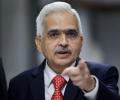
Reserve Bank Governor Shaktikanta Das on Wednesday said underlying economic activity in India continues to be strong, but external factors will cause some "dent" to the economy. Speaking at the BFSI Insight Summit 2022 organised by Business Standard, Das said the RBI tracks 70 fast moving indicators and most of them are in the "green box". It is the external sector, mired by a fear of recession or clear visibility about slowing growth in a large part of the world, where the challenges lie, he said, adding that the impact of external demand will "dent" the economy.

Reserve Bank of India Governor Urjit Patel is learnt to have told the parliamentary panel on demonetisation that discussions between the central bank and the government on the process began early last year.
A 9-10 per cent economic growth rate for India is not sustainable without creating necessary infrastructure like power, ports and roads, warns former Reserve Bank Governor Y V Reddy.

The payments banks are intended to house transactional accounts for individuals, focusing on payments and remittances.

Despite its admirable competence and proven track record, the RBI doesn't have the capacity to supervise an economy that's growing so fast and becoming larger by the year, points out T C A Srinivasa Raghavan.

'If the borrower can't repay the loan due to lack of income or losses from speculative activities, they risk defaulting on it.' 'This could lead to the bank seizing the property.'

Households are likely to remain the primary net lenders to the economy in the coming decades.

Today, the economy requires a certain amount of push not just from the monetary policy but also from its transmission: Das.
The Reserve Bank of India on Tuesday cut the bank rate by 0.25 per cent to 6 per cent with effect from close of business hours.
